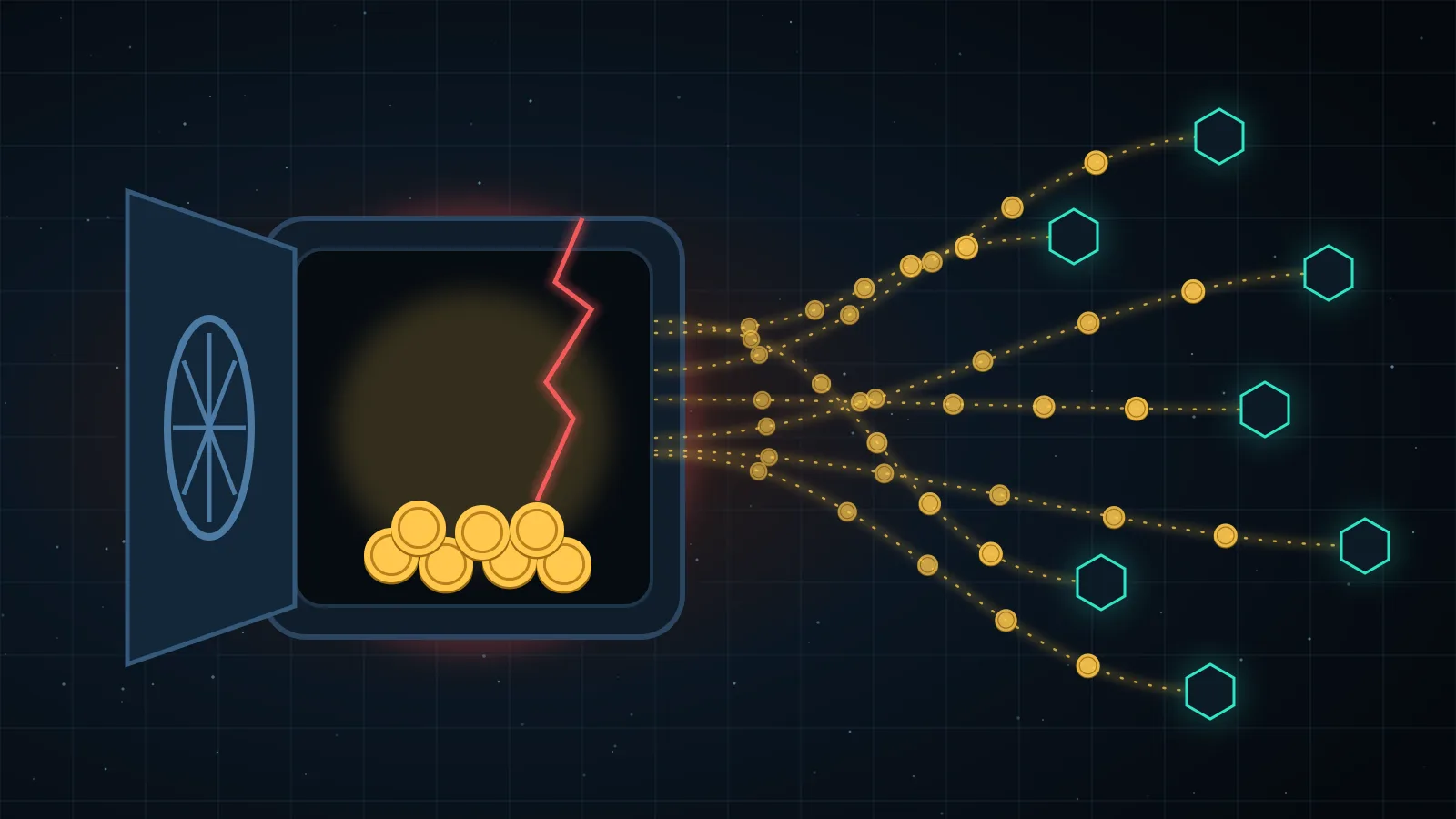

Why bonuses deserve your attention
Bonuses are worth understanding for two reasons. Good ones lower the cost of playing: cashback, rakeback and low-wagering offers return part of what you would lose anyway. Poor ones can do the opposite, because they lock your deposit behind conditions that are hard to meet. The same casino can offer both, so it pays to read the terms of each offer separately instead of judging the brand by its largest banner.
The main types of casino bonus
Welcome match bonus. The casino adds a percentage of your first deposit, for example 100% up to a cap. The bonus money comes with a wagering requirement before it, and sometimes your deposit, can be withdrawn.
Free spins. A set number of spins on named slots at a fixed stake. Winnings are often credited as bonus money with their own wagering.
No-deposit bonus. A small amount or a few spins without a deposit. Usually capped tightly on how much can be withdrawn.
Reload and deposit bonuses. Match offers on later deposits, often weekly.
Cashback. A percentage of your net losses over a period, returned as cash or bonus. Cash cashback without wagering is one of the simplest offers to value.
Rakeback. A percentage of the casino's theoretical edge on your bets, returned regardless of whether you won or lost. Popular at crypto casinos; see our rakeback and cashback list.
VIP and loyalty programmes. Levels based on how much you wager, unlocking higher rakeback, reloads, a personal manager or faster withdrawals.
Tournaments and races. Prize pools shared by the players with the best results or the highest wagering over a period.
Wagering: the number that decides everything
The wagering requirement tells you how much you must bet before bonus money becomes withdrawable. "35× bonus" on a $100 bonus means $3,500 of bets. "35× deposit plus bonus" on a $100 deposit and $100 bonus means $7,000. Same multiple, double the work, so always check what the multiple applies to.
Every bet you place carries the game's house edge, so wagering has an expected cost. A simple estimate is:
Expected cost of clearing = bonus amount × wagering multiple × house edge
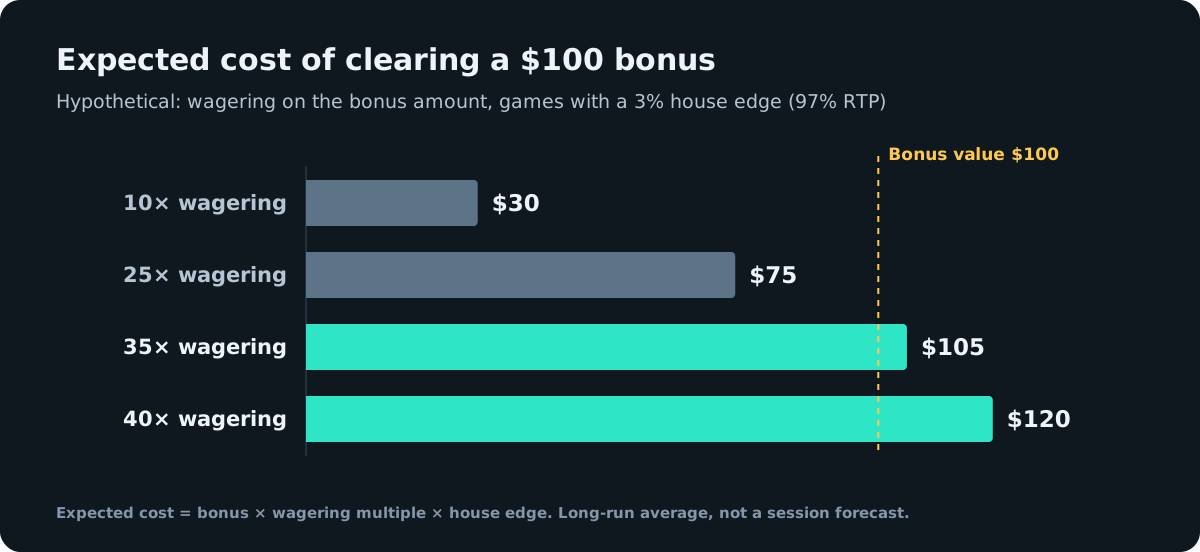
| Wagering on a $100 bonus | Total bets required | Expected cost at 3% edge | Bonus minus expected cost |
|---|---|---|---|
| 10× | $1,000 | $30 | +$70 |
| 25× | $2,500 | $75 | +$25 |
| 35× | $3,500 | $105 | −$5 |
| 40× | $4,000 | $120 | −$20 |
This is a long-run average, not a prediction of any session: you might clear a bonus quickly with a lucky run or lose the balance early. But the comparison is useful. With a 3% edge, wagering above roughly 33× the bonus means the bonus is worth less than the expected cost of clearing it. A game with a lower edge changes the break-even point, which brings us to the next rule. The UK regulator's guide to return to player explains why RTP describes the long run and not a single session.
Game contribution, maximum bet and other limits
Game contribution. Slots usually count 100% towards wagering. Table games and live casino often count 10–20% or nothing, which multiplies the real amount you need to bet.
Maximum bet. Most bonuses cap the stake per spin or hand while wagering. Going over it can void the bonus and any winnings.
Maximum cashout. Some offers, especially free spins and no-deposit bonuses, limit how much you can withdraw from them.
Time limits. A short window to claim and another to complete wagering. Unfinished wagering usually means the bonus expires.
Excluded games and payment methods. Certain slots, jackpots or deposit methods may not qualify.
Our bonuses, wagering and withdrawals guide walks through each of these terms in more detail.
Cashback and rakeback: the simplest value
Cashback and rakeback are easier to value than match bonuses because they have no or low wagering. Rakeback returns a slice of the house edge on every bet. For example, with a 3% edge and 10% rakeback, the effective edge on your play drops to about 2.7%. Cashback returns part of net losses for a period, so it softens a bad week rather than every bet.
Neither turns a negative-expectation game into a positive one. They make playing cheaper, which is exactly what a good bonus should do.
How to compare offers in five minutes
- Find the wagering multiple and what it applies to: bonus only, or deposit plus bonus.
- Check how your preferred games contribute.
- Note the maximum bet, maximum cashout and deadline.
- Estimate the expected cost with the formula above and compare it with the bonus amount.
- Compare it with simpler alternatives such as cashback or rakeback at the same casino.
If the numbers do not work, you can always play without a bonus. Our crypto casino bonuses list shows the current offers and their main terms side by side, and how online casinos work explains where bonus balances sit in your account.
Play within limits
A bonus should never be the reason to deposit more than you planned. Set a deposit limit first and treat any bonus as a discount on money you were already prepared to spend. Our responsible gambling guide explains the tools most casinos offer.
FAQ
What is a good wagering requirement?
Lower is better. As a rough guide, offers at 10–25× the bonus amount are usually reasonable on slots, while 35× and above often cost more to clear than the bonus is worth with a 3% house edge.
Is rakeback better than a welcome bonus?
They do different jobs. A welcome bonus can be large but comes with wagering. Rakeback is smaller per bet but has little or no wagering and keeps paying as long as you play. For regular players, rakeback is often the more reliable value.
Can I withdraw my deposit before finishing wagering?
It depends on the terms. Some casinos keep your real-money balance separate and let you withdraw it, cancelling the bonus. Others lock the deposit until the wagering is complete. Check the balance rules before you accept.
Do bonuses change a game's RTP?
No. The game's RTP stays the same. The bonus changes how much you get back overall, which is why the expected cost calculation matters.